The U.S. Department of Health and Human Services (HHS) has proposed updates to the Health Insurance...
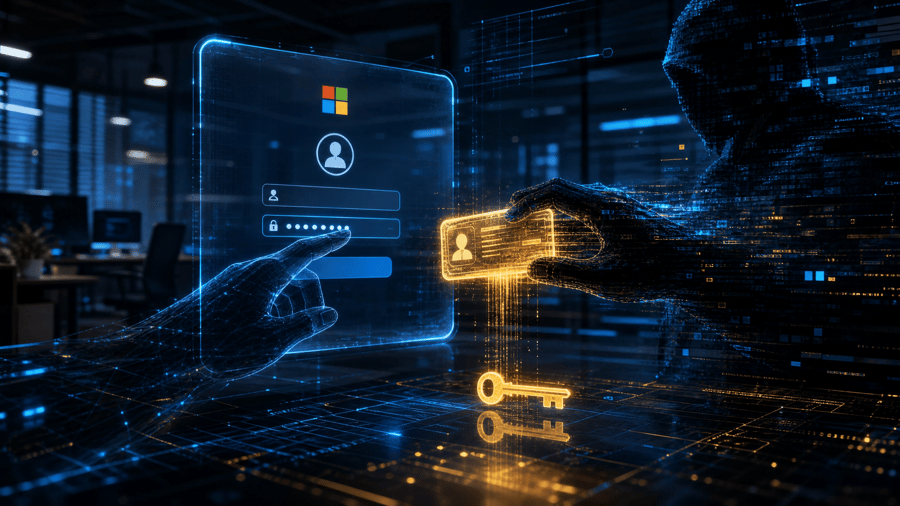
There’s a risk most SMBs never think about—until a single stolen login gives attackers access to everything.
Most cyberattacks today don’t rely on breaking through firewalls or deploying complex malware. Instead, attackers are logging in using stolen usernames and passwords.
For small and mid-sized businesses, especially those using cloud platforms like Microsoft 365, Google Workspace, or remote access tools, one compromised account can expose emails, financial data, client records, and internal systems almost instantly.
This shift represents one of the most dangerous evolutions in modern cybersecurity: attackers no longer need to break in—they simply sign in.
WHY STOLEN LOGINS ARE SO DANGEROUS
Stolen credentials give attackers legitimate access, which makes detection significantly harder.
Once inside, attackers can:
- Access email accounts and impersonate employees
- Read, send, and delete sensitive communications
- Access cloud storage and shared business files
- Reset passwords and lock out legitimate users
- Steal financial, operational, or client data
Because the login appears valid, these breaches often go unnoticed for days or weeks.
HOW CREDENTIALS ARE STOLEN
Most credential theft does not involve direct hacking attempts. Instead, attackers rely on human error and security gaps.
Common methods include:
1. Phishing Emails and Fake Login Pages
Attackers send emails that mimic trusted platforms like Microsoft 365 or Google Workspace, directing users to fake login pages designed to capture credentials.
2. Data Breaches from Third-Party Services
Credentials exposed in external breaches are often reused by attackers to access business systems.
3. Password Reuse Across Accounts
When users reuse passwords across multiple systems, one breach can unlock many accounts.
4. Malware and Keyloggers
Malicious software installed through downloads or attachments can capture keystrokes and login data.
5. Social Engineering Attacks
Attackers may impersonate IT support or vendors to trick employees into revealing credentials or granting access.
WHAT ATTACKERS CAN DO WITH STOLEN LOGINS
Once attackers gain access to a valid account, they operate as if they are the legitimate user.
Here’s what compromised credentials allow in 2026: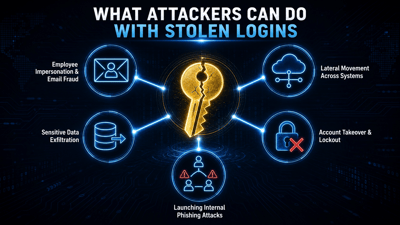
1. Access Business Email and Communications
Attackers can read, send, and delete emails while impersonating employees, often leading to fraud or further internal compromise.
2. Move Across Cloud Systems
A single login may provide access to connected systems such as Microsoft 365, shared drives, CRM platforms, and collaboration tools.
3. Steal Sensitive Data
Customer records, financial data, contracts, and internal documents can be downloaded or exfiltrated without detection.
4. Lock Out Legitimate Users
Attackers often change passwords or security settings to block access for employees.
5. Launch Internal Attacks
Compromised accounts are used to send phishing emails to other employees or clients, expanding the breach.
WHY SMBs ARE ESPECIALLY AT RISK
Small and mid-sized businesses are frequent targets because they often lack enterprise-level security controls.
Common vulnerabilities include:
- Inconsistent use of multi-factor authentication (MFA)
- Weak password policies
- Limited monitoring of user logins
- No centralized identity management
- Employees using personal devices or unsecured networks
Attackers know SMBs are less likely to detect unusual login behavior quickly, making them ideal targets.
WARNING SIGNS OF COMPROMISED ACCOUNTS
Early detection is critical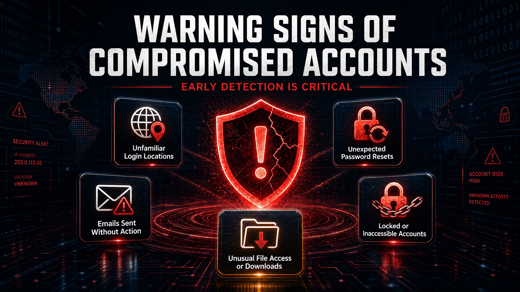
- Login attempts from unfamiliar locations
- Unexpected password reset requests
- Emails sent without user action
- Locked or inaccessible accounts
- Unusual file access or downloads
HOW TO PREVENT CREDENTIAL-BASED ATTACKS
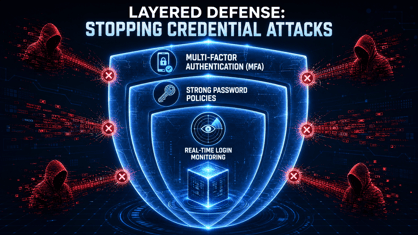
Modern cybersecurity is no longer about one control. It’s about layered security working together to stop attackers from getting in through stolen credentials.
A proper 2026-ready security strategy includes:
Multi-Factor Authentication (MFA)
Requiring a second form of verification to block access even if passwords are compromised.
Password Security
Strong, unique passwords across all accounts to eliminate the risk of reuse-based attacks.
Identity & Access Controls
Limiting user permissions so employees only have access to what they need for their role.
Login Monitoring
Tracking sign-in activity in real time to detect unusual locations, devices, or behavior.
User Access Reviews
Regularly auditing accounts and permissions to remove unnecessary or outdated access.
Employee Awareness
Training staff to recognize phishing attempts and fake login pages before credentials are exposed.
This layered approach significantly reduces the risk of credential-based attacks and limits what attackers can do even if a login is compromised.
How Fine Technologies Helps Protect Businesses in 2026
Fine Technologies helps small and mid-sized businesses reduce the risk of credential-based attacks through proactive, managed cybersecurity services designed for today’s threat landscape.
Our services include:
- Identity & Access Monitoring – tracking login activity to detect suspicious or unauthorized access in real time
- Microsoft 365 Security Configuration – securing business email, cloud accounts, and user authentication settings
- Multi-Factor Authentication (MFA) Enforcement – adding an extra layer of protection to prevent account compromise
- Endpoint Protection & Malware Defense – stopping credential theft attempts from malicious software
- Threat Detection & Security Alerting – identifying unusual behavior across user accounts and systems
- User Access Management & Control – ensuring employees only access the systems they need
- Ongoing Security Assessments – identifying weaknesses before attackers can exploit them
Most importantly, we continuously strengthen security controls to reduce exposure and protect businesses from unauthorized access attempts.
Final Thought: Cybercriminals Don’t Break In — They Log In
Stolen login credentials have become one of the simplest and most effective ways for attackers to breach business systems in 2026.
Instead of forcing their way in, cybercriminals are using valid usernames and passwords to quietly access email accounts, cloud platforms, and sensitive business data.
The reality is that most businesses will not know they’ve been compromised until the damage is already done.
The question is no longer whether attackers are targeting businesses — it’s whether your login security is strong enough to stop them.
If your account security, access controls, or monitoring haven’t been reviewed recently, now is the time to take action.
Fine Technologies
📞 813-702-9672
🌐 https://fine-technologies.com
We manage your technology so you can manage your business — with the added protection needed to stay secure against the cybersecurity threats of 2026 and beyond.
-1.png?height=200&name=Blog%20Banner%20(17)-1.png)